

Apostille for Birth Certificate

Taking a U.S. birth certificate overseas? Foreign governments, schools, and courts require an official apostille before they recognize your document. The American World Trade Chamber of Commerce (AWTCC) eliminates the confusion of international document authentication. We navigate the complex state and federal requirements so you can secure your dual citizenship, finalize a marriage abroad, or process an international adoption without delay.
Need an apostille for a birth certificate?
AWTCC reviews your specific requirements and executes the exact authentication process required by your destination country.


When Do You Need a Birth Certificate Apostille?
Foreign authorities require an apostille of your birth certificate to officially recognize your U.S. vital records. Common situations include:
Marriage Abroad: Many countries require an apostilled birth certificate before they allow a foreign national to marry. Authorities use it to confirm identity, age, birthplace, and parentage.
Dual Citizenship: Foreign authorities frequently request apostilled birth certificates for citizenship-by-descent applications to prove family lineage and eligibility.
Immigration and Residency: Immigration offices request this authentication for visa applications, residency permits, dependent visas, and family immigration cases.
Study Abroad: Schools, universities, and foreign education authorities require an apostilled birth certificate to verify a student's identity and process enrollment.
International Adoption: Adoption authorities require authenticated birth certificates for children, parents, and guardians involved in an international adoption.
Foreign Employment: Overseas employers and government agencies request apostilled birth certificates to issue work permits and run background verifications.
Family and Legal Matters: Foreign courts and registries require apostilled birth certificates to process inheritances, name verifications, and family registrations.
Apostille vs. Authentication vs. Embassy Legalization
Not every country accepts an apostille. The correct process depends on the destination country.
Apostille
When it’s used:
Used when the destination country accepts Hague apostilles
Example Situation:
Birth certificate for use in Italy, Spain, France, Germany, Mexico, India, or Japan
Authentication
When it’s used:
Used when a document needs official verification before further legalization
Example Situation:
State or federal document authentication before embassy submission
Embassy / Consular Legalization
When it’s used:
Used when the destination country does not accept apostilles
Example Situation:
Birth certificate for use in a non-Hague country
Before starting the process, confirm whether your destination country requires an apostille or consular legalization. Submitting the wrong type of authentication can delay or result in rejection of your document.
If the country where you're submitting your birth certificate is not a member of the Hague Convention, you'll need embassy legalization instead of an apostille. Check your destination country's requirements.
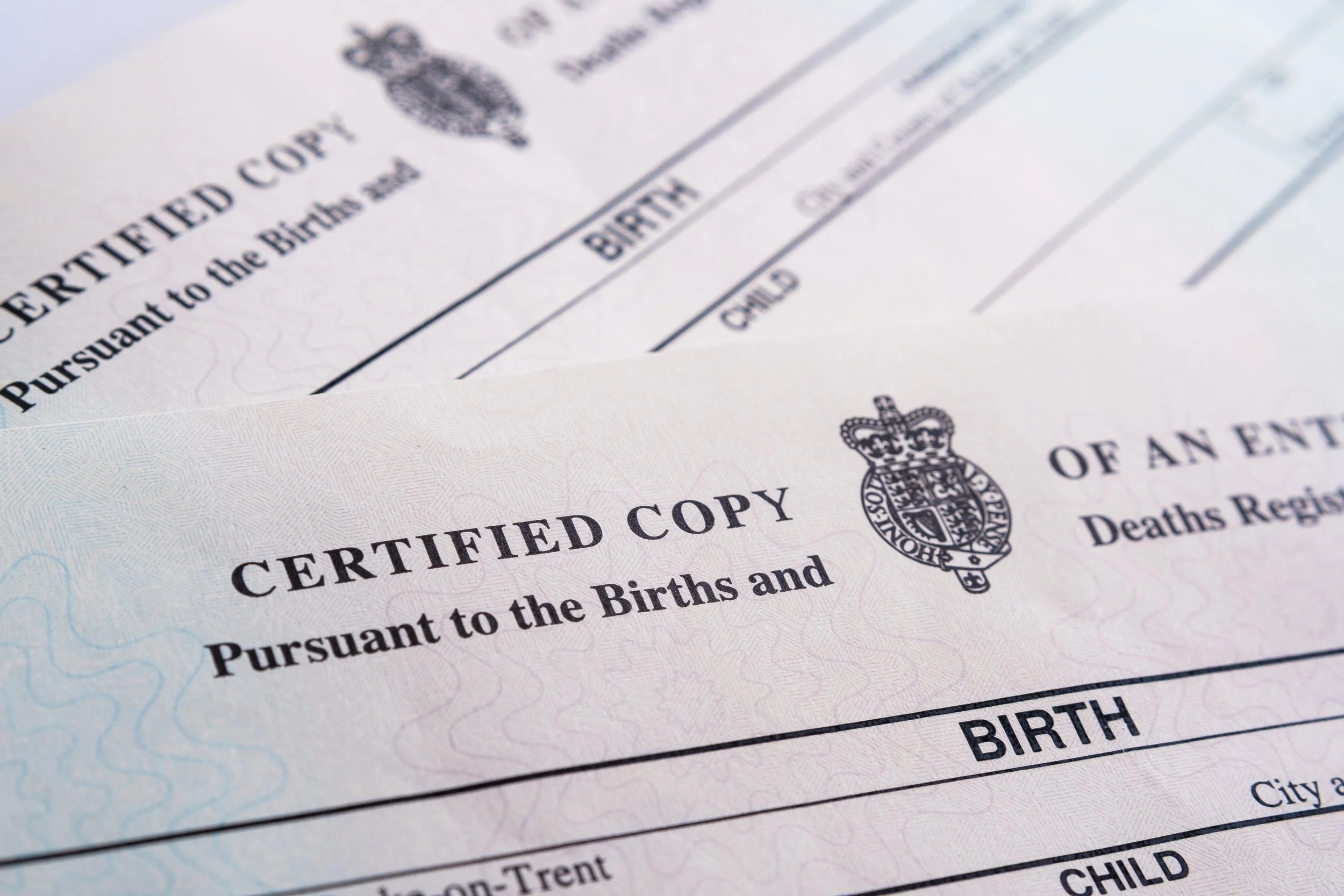
Do You Have the Correct Birth Certificate for Apostille?
State offices reject many apostille requests simply because applicants submit the wrong version of the document. Before requesting an apostille, verify that your document is a certified copy, issued by the correct vital records office, signed by an authorized official, and accepted by your destination country.
Certified Birth Certificate vs. Informational Copy
State authorities require a certified birth certificate bearing an official seal or signature. They reject informational copies for legal use.
Long Form vs. Short Form
Many countries demand a long-form birth certificate because it includes complete information (parent names, registration details). Check the specific rules for your destination country, as they often reject short-form certificates.
Hospital Birth Certificate
Government authorities do not issue hospital birth certificates or souvenir records, so states cannot apostille them.
Photocopy of Birth Certificate
States universally reject photocopies unless you complete a specific notarization process accepted by the relevant authority. Always secure a fresh certified copy.

Who Issues the Apostille for a Birth Certificate?
The Secretary of State in the state where the birth certificate originated issues the apostille. Your current location does not matter; the issuing state dictates the process.
If you were born in California but live in Florida, you must secure a California apostille.
If you were born in Texas but live in New York, you must secure a Texas apostille.
Note: Special cases, such as a Consular Report of Birth Abroad, require a separate federal authentication process.

Birth Certificate Apostille Process
AWTCC streamlines this exact process to prevent errors:
Confirm the Destination Country: Identify where you will use the birth certificate to determine if you need an apostille or embassy legalization.
Review the Birth Certificate: Verify you possess a certified, long-form copy with a visible seal and signature.
Confirm the Issuing State: Route the document to the state that originally issued the certificate.
Prepare the Requirements: Gather the destination country details, purpose of use, and any necessary translation instructions.
Submit the Document: Send the birth certificate to the appropriate state authority.
Review the Apostille: Once the state attaches the apostille, keep all staples, seals, and attachments fully intact.
Dispatch to Foreign Authority: Submit the authenticated document to the requesting foreign agency or court.

-
Every U.S. state sets its own apostille process, fees, and processing times. One state cannot apostille a birth certificate issued by another. Always verify the current state guidelines before mailing original vital records.
-
An apostille authenticates the document, but it does not translate the text. Depending on the destination country, you may need to secure a certified or sworn translation of the birth certificate, an apostille, or both. Always confirm if the foreign agency requires you to attach the translation before or after the apostille process.
-
Processing times and costs fluctuate based on the issuing state's turnaround time, courier delivery times, translation requirements, and embassy legalization requirements. If you face a strict deadline, start the process early and let AWTCC review your documents to prevent costly rejections.
-
State offices will reject your birth certificate apostille if you:
Submit a photocopy, hospital record, or informational copy.
Send a document missing the official seal or signature.
Mail the request to the wrong state.
Provide an outdated certificate when the country demands a recently issued copy.
Submit a damaged or laminated document.
Remove staples or attachments from a completed apostille.
-
Adopted Child / Amended Certificates: Ensure the destination country accepts the updated or court-amended certified copy.
Name Change After Birth: If your current name differs from the birth certificate, provide supporting documents like a marriage certificate or name change order.
U.S. Territories & Puerto Rico: Birth certificates from these regions follow distinct authentication procedures.
-
Before submission, verify:
You hold a certified birth certificate with a visible official seal and authorized signature.
The document is completely free of damage or lamination.
You confirmed the issuing state and destination country requirements.
You verified the need for an apostille versus embassy legalization.
You reviewed all the translations and received authority instructions.
How AWTCC Helps With Birth Certificate Apostille Requests
AWTCC supports your international document authentication by actively reviewing your key requirements before submission. We evaluate your document type, issuing state, destination country, and intended use.
Whether you need your birth certificate for marriage abroad, dual citizenship, immigration, or international adoption, AWTCC guides you down the correct authentication path.
Related Services

Document Authentication for International Use
For personal, business, and official documents.

Apostilles & Legalization
For documents going to Hague and non-Hague countries.

Document Legalization by Country
Check the exact requirements for your destination country.

Need an Apostille for a Birth Certificate?
AWTCC helps you execute the exact authentication process your birth certificate needs based on the issuing state, destination country, and purpose of use. Submit your document details today to confirm your specific requirements for an apostille, translation, or consular legalization.

FAQs: Apostille for Birth Certificate
-
Your birth certificate needs an apostille if it will be used in a country that accepts documents under the Hague Apostille Convention. If the destination country does not accept apostilles, the birth certificate may need to be legalized by the embassy or consulate instead. The correct process depends on the destination country, not just the document type.
-
Yes, but the apostille is usually issued by the state where the birth certificate was issued, not by the state where you currently live. For example, if you were born in California but now live in Florida, your California birth certificate would typically need to be apostilled through the California Department of Public Health.
-
A certified birth certificate issued by the official state, county, or vital records office is usually required. Hospital records, souvenir birth certificates, photocopies, damaged documents, and informational copies may not be accepted for apostille.
-
A birth certificate apostille may be rejected or delayed if the document is not a certified copy, was issued by the wrong authority, has a missing seal or signature, is laminated or damaged, was sent to the wrong state office, or is being prepared for a country that requires legalization instead of an apostille.
-
Sometimes. An apostille only authenticates the birth certificate; it does not translate the document. Some countries or foreign agencies may require a certified translation of the birth certificate, the apostille, or both. The translation requirement should be checked before submission.