

Apostille for Immigration Documents

Prepare your U.S. documents for immigration, visa, residency, or citizenship applications abroad with the American World Trade Chamber of Commerce (AWTCC). Our apostille for immigration documents service helps you identify the correct authentication process for vital records, federal documents, background checks, academic records, and other supporting paperwork.
Immigration applications often require documents from various state and federal authorities. AWTCC reviews your specific documents and destination country to determine whether you need an apostille, authentication, or consular legalization.
Apostille Services for Immigration Documents
-

Document Review and Routing
Submit your document details for review. We identify whether each record follows a state or federal authentication process and determine the appropriate authority before we begin processing.
-

State and Federal Document Processing
Immigration files often contain documents from different government levels. State authorities process the vital records they issue, while the U.S. Department of State must process eligible federal records.
-

Visa and Immigration Document Support
Our apostille services support records that you plan to use for foreign visa applications, residency procedures, citizenship matters, family reunification, overseas employment, and other cross-border immigration requirements.
-

Apostille or Legalization Guidance
We determine whether your destination uses the Hague Apostille Convention process or requires another authentication and legalization route. For qualifying Hague Convention destinations, an apostille replaces the traditional diplomatic or consular legalization process.
-

Multiple-Document Coordination
One immigration application may contain a birth certificate, marriage certificate, FBI background check, academic credential, and an affidavit. We evaluate each document separately because different records demand different authentication authorities and preparation steps.
-
Translation Requirement Guidance
Some immigration authorities require you to translate documents alongside your authentication. Translation requirements depend on the destination country and receiving authority, so you must confirm them before you submit your final application.

When Do You Need an Apostille for Immigration Documents?
A foreign immigration authority may request official authentication for your U.S. records when it cannot independently verify the signature, seal, or official capacity associated with the original document. An apostille authenticates the origin of a qualifying public document; it does not certify that every statement within the document is factually correct.
Common situations that require an immigration document apostille include:
-
Foreign consulates and immigration authorities often request authentication for civil, federal, educational, or supporting records when reviewing long-term, work, or dependent visas.
-
Residency applications routinely require authentication for identity documents, civil-status records, and criminal background checks.
-
Applicants often need apostilles for birth, marriage, naturalization, or family records to document citizenship, ancestry, identity, or family relationships.
-
Immigration authorities request authentication for birth certificates, marriage certificates, and divorce records to establish qualifying family relationships.
-
Overseas employment and skilled-migration programs demand authentication for FBI background checks, diplomas, transcripts, and professional qualifications.
-
Individuals moving abroad need authentication for personal records to secure residence permits, local registrations, and immigration filings.
Requirements differ by country, immigration program, and receiving authority. Confirm the exact document and authentication requirements before you begin.
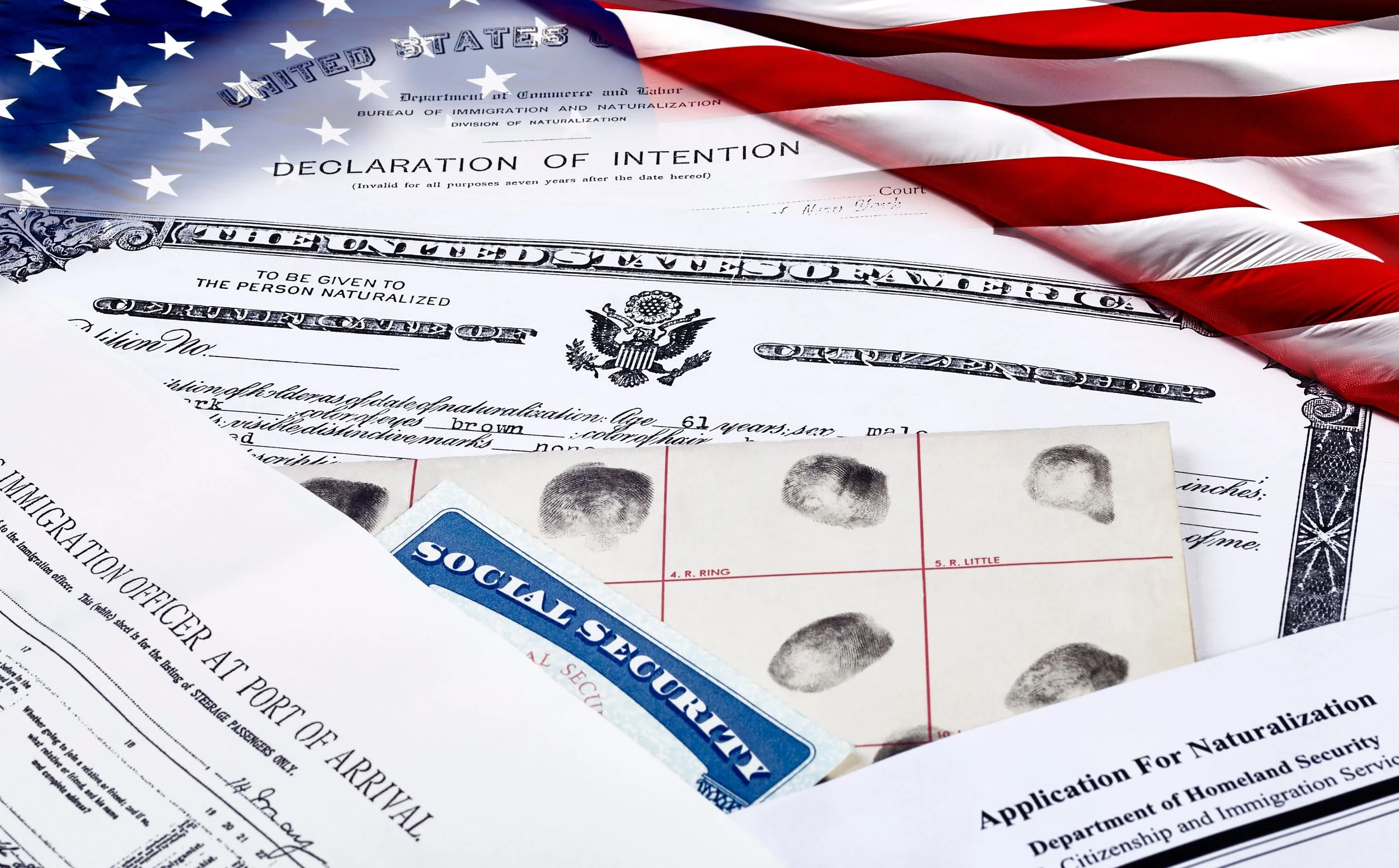

Immigration Documents We Authenticate
AWTCC provides immigration apostille services for a wide range of U.S. records commonly required for international immigration and visa applications.
Birth Certificates: State or local authorities certify these vital records so you can establish identity, age, nationality, parentage, or family relationships abroad.
Marriage Certificates: Applicants use these official marriage records for spousal visas, dependent applications, residency, and citizenship procedures.
Divorce Decrees: Courts issue these records so individuals can establish prior marital status or support family-law applications abroad.
FBI Background Checks: Foreign authorities require these federal criminal-history records for visas, residency permits, citizenship applications, or overseas employment. The U.S. Department of State specifically designates FBI background checks as federal documents that qualify for an apostille in Hague Convention countries.
Certificates of Naturalization: The U.S. Department of Homeland Security issues certain naturalization records, which follow the federal apostille process when foreign authorities need to authenticate them.
Academic Records: Diplomas, transcripts, degrees, and professional credentials support skilled-worker, employment, study, or professional immigration applications.
Affidavits and Notarized Documents: You must properly notarize personal statements, consent forms, powers of attorney, and declarations before the state authenticates them.
Other Supporting Immigration Records: Depending on the program, foreign authorities may also require you to authenticate additional federal, state, court, or notarized records.
Different authorities apostille immigration-related documents in different ways. The correct procedure depends entirely on who issued the record and how the receiving authority expects you to present it.

How to Get an Apostille for Immigration Documents
The apostille process for immigration starts with identifying the origin of each document and the country where you plan to use it.
Identify the Documents Required: Confirm exactly which records the foreign immigration authority, embassy, consulate, or visa office requires. Do not authenticate documents simply because they belong to your personal records; determine what the receiving authority actually requests.
Confirm the Issuing Authority: Identify whether a state authority, federal agency, court, educational institution, or private signer originates each document. This dictates the authentication route.
Prepare the Correct Document Version: Depending on the document, you may need an original, a certified copy, a vital record from the proper authority, or a notarized document. Federal authentication guidance, for example, strictly requires you to submit eligible federal documents as originals or certified copies with appropriate signatures and seals.
Let AWTCC Determine the Authentication Path: We review the document type, destination, and intended use to coordinate the applicable apostille or legalization procedure. AWTCC already provides apostille and legalization processing through the appropriate U.S. authorities, embassies, and consulates.
The Appropriate Authority Processes the Document: State documents follow the process that the issuing state establishes. Eligible federal records follow the applicable federal authentication process. The United States designates different competent authorities depending on the document's origin.
Receive Your Authenticated Documents: Once we complete the processing, you can use the documents to meet the foreign immigration or visa authority's requirements.
State vs. Federal Immigration Document Apostilles
Determining whether your record follows a state or federal process is the most critical step in securing an apostille. The document's origin—not simply where you currently live—determines which authority handles the authentication.
| Document Type | Typical Authentication Level | Examples |
|---|---|---|
| Documents from State Authorities | Appropriate state authority | Birth certificates, marriage certificates, divorce records, state court records |
| Federal Documents | U.S. Department of State or other designated federal authority | FBI background checks, eligible naturalization records, certain federal agency documents |
| Private Documents You Notarize | State process after you secure proper notarization | Affidavits, declarations, powers of attorney, consent documents |
| Academic Documents | Depends on the issuing institution and state requirements | Diplomas, transcripts, enrollment letters, professional credentials |
Sending a federal document through a state-only process, or submitting a state record to the wrong authority, causes immediate processing failures. AWTCC strictly manages this federal-versus-state distinction to prevent delays.
Apostille vs. Legalization for Immigration Documents
The destination country dictates your international authentication pathway.
The U.S. Department of State explains that applicants use apostille certificates for qualifying documents when applying to countries that participate in the 1961 Hague Apostille Convention. Conversely, applicants use authentication certificates for documents going to countries outside that framework; these destination countries then apply their own additional legalization requirements.
| Document Type | Typical Authentication Level | Examples |
|---|---|---|
| Documents from State Authorities | Appropriate state authority | Birth certificates, marriage certificates, divorce records, state court records |
| Federal Documents | U.S. Department of State or other designated federal authority | FBI background checks, eligible naturalization records, certain federal agency documents |
| Private Documents You Notarize | State process after you secure proper notarization | Affidavits, declarations, powers of attorney, consent documents |
| Academic Documents | Depends on the issuing institution and state requirements | Diplomas, transcripts, enrollment letters, professional credentials |
AWTCC manages both pathways and executes the appropriate process based on your document and destination.


Avoid Common Immigration Document Authentication Delays
Immigration applications often contain multiple records, so one incorrect document can derail your larger submission. We help you avoid common problems, which include:
Submitting a photocopy when the authority requires an original or certified copy
Using an outdated or unacceptable document version
Sending a state document through the wrong jurisdiction
Sending a federal record to a state apostille authority
Missing required signatures, seals, or certifications
Improperly notarizing a document
Requesting an apostille when the destination actually requires a consular legalization process
Failing to check translation requirements
Assuming every document in an immigration application follows the same process
Starting authentication before you confirm the receiving authority's document requirements
AWTCC reviews your records before routing them through the appropriate authentication process. This step helps us identify document-preparation issues before they reach the responsible government authority.


Why Choose AWTCC?
End-to-End Immigration Document Authentication: AWTCC coordinates apostille services for immigration documents based on the issuing authority's exact specifications and the destination country.
State and Federal Routing Experience: We determine whether your documents require state processing, federal processing, or another authentication pathway, rather than treating every record the same way.
Apostille and Legalization Support: AWTCC handles apostille requests for qualifying Hague destinations and manages authentication and consular legalization processes for non-Hague countries.
Support for Multi-Document Immigration Files: We evaluate the different document types in your visa, residency, or citizenship application and follow the unique process each one requires.
Broad Document Authentication Capabilities: AWTCC's existing services cover personal and vital records, federal documents, academic credentials, notarized documents, corporate records, and trade documentation.
Destination-Specific Guidance: Because requirements vary internationally, we consider your destination country before selecting an authentication strategy.
Frequently Asked Questions
-
Common records include birth certificates, marriage certificates, divorce decrees, FBI background checks, certain naturalization records, academic credentials, and properly prepared notarized documents. However, eligibility and processing requirements depend entirely on the document's issuing authority and format. Therefore, you must determine apostille requirements document by document rather than applying one broad process to an entire immigration file.
-
Possibly. A foreign embassy, consulate, immigration authority, or employer may require you to authenticate your supporting documents as part of a visa application. Whether you need an apostille depends on your destination country, visa category, and receiving authority.
-
Generally, no. Because an FBI Identity History Summary is a federal document, it follows the federal apostille process. Conversely, a birth certificate from a state authority follows the apostille procedure of the specific state that issued it.
-
Not always. Translation requirements depend on the destination and receiving authority. Some foreign authorities require translation, and certain authentication procedures impose specific preparation rules. Confirm whether the receiving agency expects you to translate the original document, the apostille, or both before you submit them.
-
You need an authentication and consular/embassy legalization process instead of an apostille. The U.S. Department of State distinguishes apostille certificates (for Hague Convention countries) from authentication certificates (for countries outside that framework). AWTCC coordinates the appropriate authentication or legalization pathway for you.