

Export Documentation for Chemicals & Hazardous Materials

Clear your international chemical shipments without delay using the American World Trade Chamber of Commerce (AWTCC)’s secure export documentation platform. We help U.S. chemical exporters, manufacturers, distributors, and freight forwarders prepare the exact certified documents that foreign customs authorities, carriers, banks, and buyers demand.
Because hazardous materials and heavily regulated compounds face strict international scrutiny, you must ensure every document you present is accurate, correctly formatted, and properly certified. We provide the recognized chamber certifications and legalization services you need to keep your chemical supply chain moving.
Chemical Export Documentation Services
-
Digital Submission Process
Upload your commercial invoices, packing lists, and origin declarations for immediate processing. Our secure online platform standardizes the workflow for exporters and freight forwarders nationwide.
-
Chamber-Issued Certificates of Origin
We issue globally recognized, fully accredited Certificates of Origin that foreign customs authorities instantly trust and verify.
-
International Recognition
We provide electronic verification tools that foreign authorities use to clear shipments faster, eliminating costly border delays.
-
Apostille & Legalization Assistance
When your destination country requires additional authentication, we coordinate the appropriate apostille or consular legalization pathways for your chemical documents.
-
Tailored Chemical Support
We process documentation for industrial chemicals, specialty compounds, raw materials, additives, regulated samples, and consumer chemical products.


When Do You Need Chemical Export Documentation?
International authorities and trade partners require certified documents to process your chemical shipments for several critical reasons:
Customs Clearance
Foreign border authorities require Certificates of Origin to determine correct tariff treatments, assess import eligibility, and clear regulated goods.
Carrier & Transport Compliance
Freight carriers require strict documentation and safety verifications for hazardous materials before loading chemical goods onto planes or vessels.
Banking & Letters of Credit
Financial institutions require certified export documents before releasing funds or processing letters of credit for international transactions.
Buyer Requirements
Overseas importers request authenticated documentation to satisfy their own internal safety, procurement, and local regulatory standards.
Destination-Specific Legalization
Certain non-Hague Convention countries mandate embassy or consular legalization before allowing specific chemical compounds to cross their borders.

Common Export Documents We Process
Depending on your product, destination country, and buyer instructions, we help you process and certify:
Commercial invoices
Packing lists
Chamber-issued Certificates of Origin
Certificates of Free Sale (when applicable)
Apostilled or consular-legalized documents
Compliance Note: You must independently confirm your specific shipment requirements, including Safety Data Sheets (SDS), Dangerous Goods Declarations, hazardous materials shipping papers, and AES/EEI filings with your buyer, freight forwarder, and compliance team before shipping.

Chemical, Hazardous Materials, and Export Control Considerations
Strict U.S. export control rules (including EAR and ECCN classifications) and hazardous materials transport regulations govern many chemical products. Freight carriers will reject shipments if your documentation fails to match the product's safety classification, packaging, or labeling.
AWTCC certifies and processes export documentation; we do not classify chemicals, determine hazardous materials status, or provide legal advice.
As the exporter, you remain solely responsible for reviewing your SDS/MSDS, confirming chemical classifications, securing necessary export licenses, and fulfilling all regulatory obligations with your internal safety teams, qualified HazMat professionals, or the appropriate U.S. government agencies.
How to Process Your Chemical Documents
Our digital workflow helps you manage document requests with speed, consistency, and total visibility.

1. Gather Shipment Details
Collect your exporter and consignee details, product descriptions, commercial invoice, packing list, and routing information.

2. Verify Compliance & Safety Data
Prepare your required SDS/MSDS, hazard classes, UN numbers, and AES/EEI filing details.
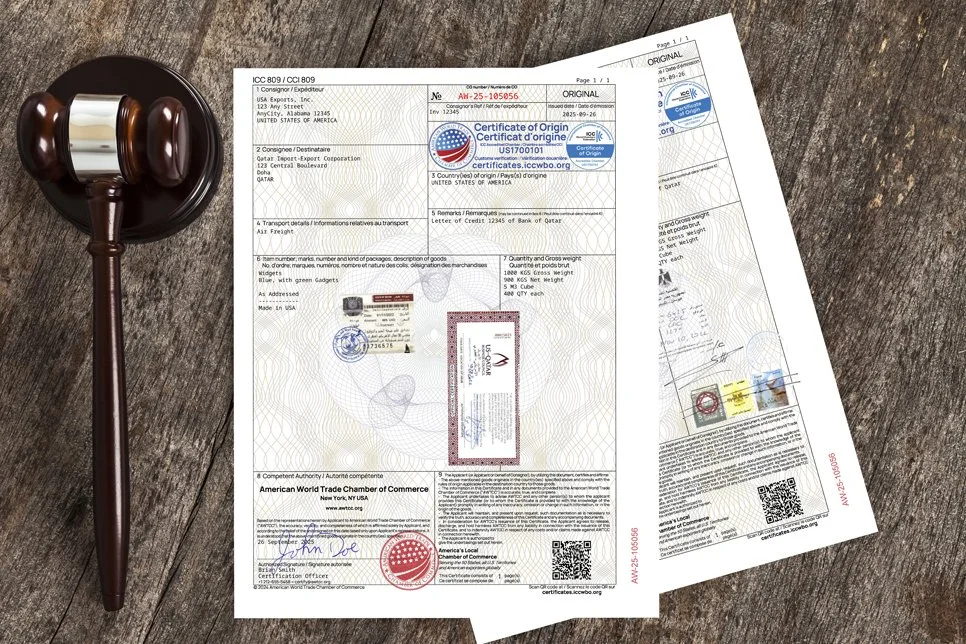
3. Submit Documents Electronically
Register your company on the AWTCC platform and submit your document request online.

4. Receive Certified Documents
Our team reviews your request and issues the appropriate chamber certifications or coordinates the necessary legalizations.


Who We Support
We support a wide range of U.S. trade partners moving chemical products across borders:
Industrial and specialty chemical manufacturers
Chemical distributors and raw material exporters
Hazardous materials exporters
Laboratory and research chemical suppliers
Cosmetic, personal care, and supplement companies
Freight forwarders managing chemical logistics

Why Choose AWTCC?
U.S. Chamber Authority: Our national chamber network backs our trusted, accredited export documents, granting you automatic international credibility.
Secure Electronic Processing: You reduce manual paperwork and physical mailing delays through our secure digital submission platform.
Document Verification Tools: We provide verifiable documentation that overseas parties can instantly authenticate online.
Comprehensive Logistics Support: We understand the strict compliance timelines chemical exporters face, and we process documents specifically to meet those demands.
Apostille & Legalization Coordination: We manage multi-step embassy legalizations so you do not have to navigate foreign consular bureaucracy alone.
Frequently Asked Questions
-
SDS stands for Safety Data Sheet, replacing the older term MSDS (Material Safety Data Sheet) under updated hazard communication standards. However, some international partners still use the term MSDS interchangeably.
-
Yes. Hazardous chemicals require specific shipping papers, a Dangerous Goods Declaration, SDS documentation, proper hazard classifications, and carrier-specific paperwork based on the mode of transport and destination.
-
No. AWTCC processes documentation but does not classify chemicals or determine HazMat status. You must confirm classifications through your product SDS, internal safety teams, or regulatory advisors.
-
Yes. Composition, destination, end-user, or intended use subjects many chemicals to export controls. You must review the EAR, ECCN, restricted-party, and licensing requirements before you ship.
-
Yes. Freight forwarders use our platform daily to secure chamber-issued documentation for their clients exporting chemicals.