

Export Documentation for Energy, Oil & Gas Companies

Energy and oil & gas shipments move under tight deadlines, high contract values, and strict international documentation requirements. Missing Certificates of Origin, uncertified invoices, or improperly authenticated documents delay shipments at customs, stall bank transfers, and frustrate buyers.
The American World Trade Chamber of Commerce (AWTCC) processes certified export documentation for U.S. energy companies, oilfield suppliers, industrial exporters, EPC contractors, and freight forwarders through a secure digital platform. We issue Certificates of Origin, certify commercial documents, and coordinate apostilles and consular legalization for your energy exports.

Export Documentation Support for Energy Shipments
-
Online Document Processing
Submit invoices, packing lists, and origin statements through AWTCC’s secure digital system for rapid review and certification.
-
Certificates of Origin for Energy Exports
Secure ICC-accredited Certificates of Origin for oilfield equipment, refinery parts, pipeline materials, energy technology, spare parts, and industrial machinery.
-
Certified Commercial Documents
Certify commercial invoices, packing lists, manufacturer declarations, and distributor documents to satisfy buyer, bank, and customs requirements.
-
Document Authentication Support
AWTCC embeds digital verification tools in every document, enabling overseas parties to instantly verify authenticity during trade, customs, or banking reviews.
-
Apostille and Consular Legalization
AWTCC coordinates apostille and embassy legalization for eligible energy exports when destination countries demand additional authentication.


Why Energy Companies Need Certified Export Documents
Energy-sector exports involve complex supply chains, technical products, and strict multi-party reviews. Certified documents accelerate customs clearance, release bank payments, and satisfy project compliance rules.
Customs and Import Review
Customs authorities require origin documents and certified commercial documentation to verify goods and apply the correct import tariffs.
Oilfield and Industrial Project Demands
International energy projects require certified documents before allowing equipment, replacement parts, or industrial components into the project supply chain.
Banking and Payment Requirements
Banks require properly certified commercial documents before executing letters of credit and transferring international payments.
Country-Specific Authentication
Certain destination countries mandate apostille or consular legalization before accepting commercial documents for oil, gas, or industrial shipments.

Export Documents We Process
AWTCC processes and certifies the following documents based on your product, destination country, and buyer instructions:
Commercial invoices
Packing lists
Chamber-issued Certificates of Origin
Manufacturer declarations
Agency or distributor documents
Powers of attorney
Contracts and commercial agreements
Oilfield and industrial equipment export documents
Apostilled or consular-legalized documents
Compliance Note: Always confirm specific shipment requirements with your buyer, freight forwarder, customs broker, and compliance team before submitting or shipping.

Energy and Oil & Gas Export Considerations
Oil and gas exports include refinery equipment, offshore supplies, pipeline components, drilling tools, power-generation equipment, and heavy machinery. These shipments pass through exporters, freight forwarders, customs brokers, banks, importers, and project owners.
At AWTCC, we exclusively certify and authenticate export documentation. We do not classify products, confirm sanctions exposure, determine import eligibility, dispense legal advice, or approve shipment compliance.
You remain responsible for confirming product details, licensing obligations, buyer instructions, customs rules, restricted-party screening, and project-specific documentation requirements with your compliance professionals.
How to Submit Energy Export Documents
Our digital workflow manages documentation requests with speed and precision.

1. Prepare Your Shipment Information
Gather exporter and consignee details, product descriptions, invoice data, packing information, origin details, and routing details.

2. Review Required Documents
Verify the exact documents your buyer, bank, freight forwarder, customs broker, or project owner demands.
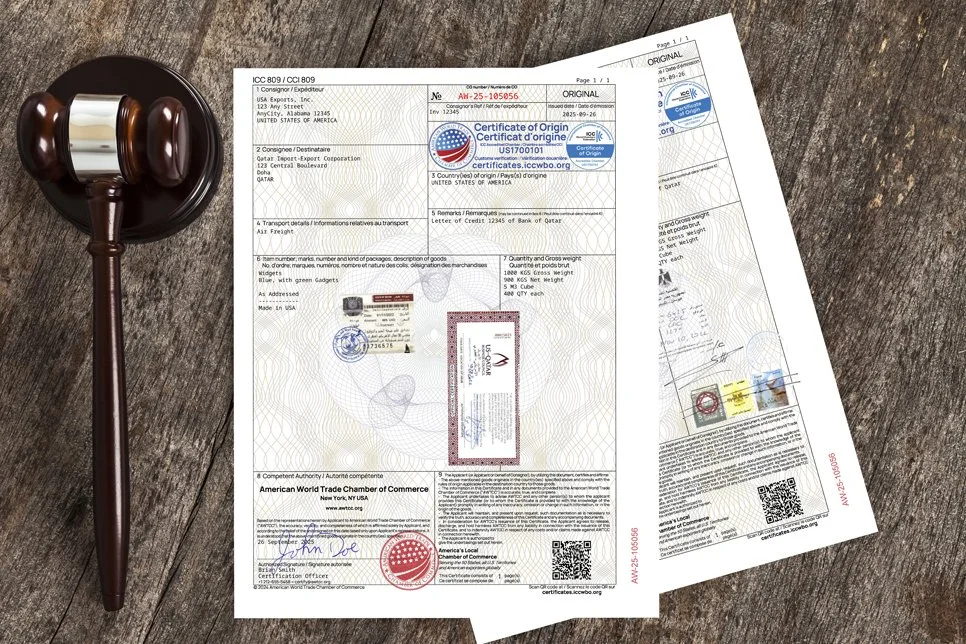
3. Submit Documents Electronically
Log in to your AWTCC platform account and submit your export document request online.

4. Receive Certified Documents
AWTCC reviews the request, issues eligible chamber certifications, and coordinates apostille or consular legalization when needed.

Who Uses This Service
At AWTCC, we support U.S. companies driving global energy, oil, gas, and industrial exports:
Oilfield equipment suppliers
Energy equipment manufacturers
Refinery component exporters
Pipeline materials suppliers
Offshore and marine energy vendors
Industrial machinery exporters
Power-generation equipment companies
EPC contractors
Freight forwarders managing energy-sector shipments
Why Work With AWTCC?
Recognized Chamber Certification: AWTCC issues globally recognized export documents that satisfy international trade rules, customs processing, and banking requirements.
Secure Digital Workflow: Eliminate manual paperwork and mailing delays by submitting document requests through our secure platform.
Verifiable Documentation: Overseas buyers and authorities instantly verify document authenticity using our embedded digital verification tools.
Support for Time-Sensitive Exports: Energy shipments run on strict project schedules. AWTCC executes document certification rapidly to prevent supply chain delays.
Authentication Coordination: We navigate the complex apostille and consular legalization processes when destination countries require additional legal authentication.
Frequently Asked Questions
-
Buyers, banks, and customs authorities typically demand a commercial invoice, packing list, Certificate of Origin, bill of lading, and manufacturer declaration. Exact requirements depend on the destination country and transaction terms.
-
Yes. Buyers, banks, and customs authorities require a Certificate of Origin to verify the goods' country of origin.
-
Yes. AWTCC processes Certificates of Origin, commercial invoices, packing lists, manufacturer declarations, and authentication requests for all oilfield and industrial exports.
-
Destination countries, buyers, or banks dictate apostille or consular legalization requirements when they demand an extra layer of legal authentication.
-
Yes. Freight forwarders submit document requests daily on behalf of energy companies, oilfield suppliers, refinery equipment exporters, and industrial manufacturers.