
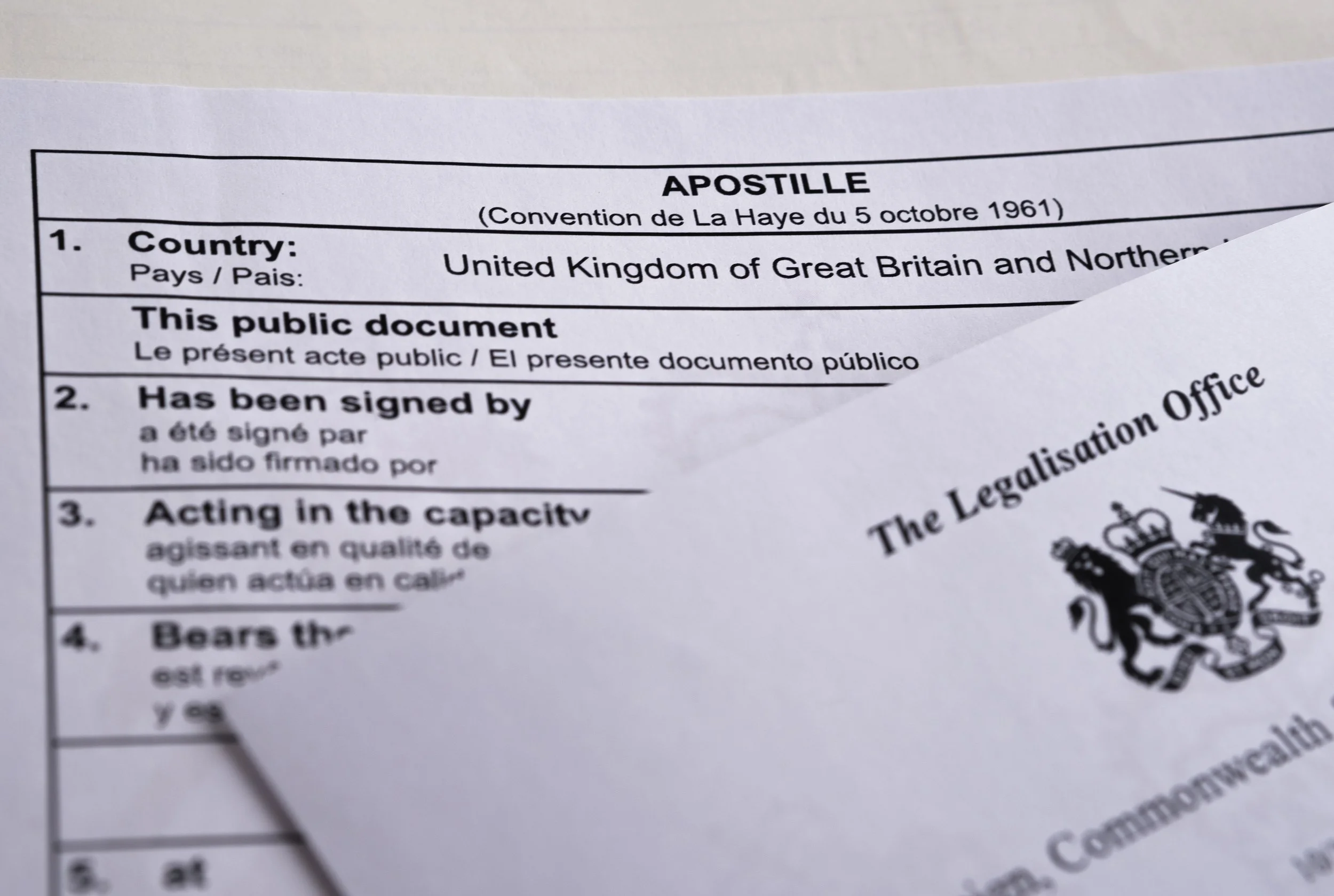
AWTCC (American World Trade Chamber of Commerce) helps U.S. exporters, freight forwarders, and chambers of commerce navigate apostille and document legalization requirements for international business. When companies prepare contracts, corporate records, or regulatory documents for overseas use, they often face one important question: Which authority should authenticate the document? The answer depends on the document's origin, the official who issued or notarized it, and the destination country's requirements.
Apostille requirements differ across U.S. states. Although states follow the same international authentication framework, their offices establish different procedures for notarized documents, certified copies, and submissions. Understanding these differences helps businesses prepare their documents properly and reduce avoidable administrative delays.
This guide explains federal and state apostille requirements, compares procedures in New York, Florida, and New Jersey, and provides a practical checklist for U.S. businesses managing international documentation.
What Is an Apostille, and Why Do Businesses Need One?
An apostille is an official certificate that authenticates the origin of a qualifying public document under the 1961 Hague Apostille Convention.
It confirms the authenticity of the relevant official's signature, the capacity in which that person acted, and, where applicable, the document's seal or stamp.
An apostille does not confirm that every statement in the document is accurate. It also does not replace regulatory approval, customs documentation, or the receiving authority's review.
U.S. businesses may encounter apostille requirements when they:
Register a company or establish a business presence overseas.
Authorize an international representative through a power of attorney.
Submit corporate records to foreign banks or institutions.
Provide intellectual property documents for international transactions.
Authenticate certain government-issued certificates for overseas use.
Before requesting an apostille, confirm that the Hague Convention applies between the United States and the destination country. The HCCH Apostille Convention status table provides official treaty information.
Important: The Convention excludes certain administrative documents that deal directly with commercial or customs operations. Consequently, exporters should not assume that every commercial invoice, Certificate of Origin, or trade certificate automatically qualifies for an apostille. The applicable authority and foreign recipient must confirm the appropriate authentication procedure.
Who Issues Apostilles in the United States?
The United States uses different authorities for state-origin and federal documents. Businesses should identify the document's issuing or certifying authority before choosing a submission office.
State Apostilles
Designated state authorities issue apostilles for qualifying documents that originate within their jurisdiction.
These documents commonly include:
State-issued certificates of good standing or status.
Certified articles of incorporation or organization.
Documents notarized by an authorized notary public.
Qualifying court records and other certified state documents.
In many states, the Secretary of State handles apostilles. Other states assign this responsibility to a different designated authority.
Your company's headquarters location does not necessarily determine where you should request an apostille.
For example, a New Jersey company may execute a power of attorney before a properly commissioned New York notary. That notarized document generally follows New York's authentication requirements, regardless of the company's New Jersey address.
Federal Apostilles
The U.S. Department of State's Office of Authentications handles apostille requests for qualifying documents issued or signed by federal authorities.
Examples may include:
Certain FBI background check documents.
Federal agency export certificates.
Qualifying USDA documents.
Certain FDA certificates.
Federal court documents and other eligible federal records.
Federal records must meet the department's document preparation requirements.
The U.S. Department of State specifically instructs applicants not to notarize original federal documents before requesting an apostille. Instead, applicants should submit the required original or certified document.
Review the U.S. Department of State's apostille instructions before preparing a federal submission.
Common Business Documents and Their Apostille Requirements
The following table shows common authentication routes for documents that businesses use internationally.
| Business document | Typical authentication authority |
|---|---|
| Certificate of good standing | Designated authority in the issuing state |
| Certified articles of incorporation | Designated authority in the issuing state |
| Notarized power of attorney | Authority responsible for the notary's commission |
| Notarized business affidavit | Authority responsible for the notary's commission |
| Qualifying FDA or USDA certificate | U.S. Department of State |
| Eligible federal patent or trademark record | U.S. Department of State |
| Commercial invoice or chamber-issued certificate | Depends on the document, issuer, and receiving authority's requirements |
A private business document does not automatically qualify for an apostille simply because a company representative signed it.
Depending on the document and intended use, the company may need notarization, chamber certification, or another recognized authentication procedure.
U.S. exporters should confirm the required sequence with the receiving authority before submitting commercial documents.
AWTCC's Document Legalization by Country resource provides additional guidance for businesses planning international document authentication.
Why Do Apostille Requirements Differ by State?
The Hague Convention establishes a common authentication framework, but U.S. state authorities control many administrative aspects of their own procedures.
1. County Clerk Certification
Some states require an additional certification before their apostille office processes a notarized document. New York, for example, requires the appropriate county clerk to certify a notary's signature before the Department of State issues an apostille.
Other states may verify qualifying notarial signatures through their own procedures without an equivalent county clerk step.
2. Original Documents and Certified Copies
State offices specify which document formats they accept. Some applications require an original government-issued record. Others may accept a certified copy from the relevant issuing authority.
Businesses should not assume that an ordinary photocopy or a company-certified copy meets a state's requirements.
3. Notarial Certificates and Signatures
Improper notarization can prevent an authority from processing an apostille request. Common problems include incomplete notarial wording, missing signatures, invalid notarial credentials, or documents that do not satisfy the applicable state's rules.
Review the document before sending it to the authentication office.
4. Application and Submission Procedures
States use different request forms, payment methods, delivery instructions, and submission channels. Some authorities accept applications by mail. Others provide walk-in services or online ordering systems that still require physical documents.
Businesses should consult the relevant state authority before filing.
Apostille Requirements in New York, Florida, and New Jersey
New York, Florida, and New Jersey provide useful examples of how state-level procedures differ.
| Requirement | New York | Florida | New Jersey |
|---|---|---|---|
| Issuing authority | Department of State | Department of State, Division of Corporations | Department of the Treasury, DORES |
| Notarized documents | County clerk certification generally required | Complete Florida notarial statement and required original notarial elements | Qualifying documents require applicable original signatures |
| Public records | State and local record rules differ | Original certified documents or qualifying certificates | Original or certified documents from recognized authorities |
| Submission | Mail or designated walk-in locations | Mail under published filing instructions | Online order followed by document delivery |
| Non-Hague process | Certificate of authentication | Notarial certification | Certification of public official |
New York
The New York Department of State authenticates only public documents issued in New York and signed by a New York State official or a county clerk. For a notarized document, take it to the clerk of the county where the notary qualified. The clerk certifies the notary's signature, and the state then issues the apostille or certificate of authentication. Locally issued vital records also need county clerk certification. For a deeper walkthrough, check our Page to Apostille Services in New York.
Florida
The Florida Secretary of State serves as the only competent authority in Florida, and the Division of Corporations processes requests. The office requires an original certified copy or certificate of status and rejects photocopies. Notarized documents need a full notarial statement and the notary's original signature, stamp, and seal. Florida directs federal documents to the U.S. Department of State and documents from other states to those states. Learn more about Apostille Services in Florida.
New Jersey
In New Jersey, DORES issues apostilles and certifications for New Jersey notaries and selected public officials, such as Superior Court judges, county clerks, and the State Registrar. Filers start with the online order service and then mail or drop off the originals. The Division cannot authenticate vital records from other states, and it recommends a notarized English translation for documents in other languages. See Apostille Services in New Jersey for business document guidance.
How Should Businesses Handle Documents From Multiple States?
Companies sometimes need to authenticate several documents for one international transaction. Those documents may originate from different jurisdictions.
Consider a hypothetical New Jersey cosmetics exporter preparing corporate records for an overseas distributor.
The distributor requests three documents:
New Jersey certificate of good standing: The company obtains the appropriate certified state record and follows New Jersey's apostille procedure.
Power of attorney notarized in New York: The company follows New York's county clerk certification requirements before applying for the apostille.
Qualifying FDA-issued export certificate: The company verifies the federal document's eligibility and follows the U.S. Department of State's authentication instructions.
These documents may require separate applications and government offices.
Submitting all three to a single state office could cause administrative problems because that office lacks authority over some documents.
A document-by-document review helps the exporter identify the appropriate route before filing.
The company must also confirm that the overseas recipient accepts each document type and its corresponding authentication.
State Apostille vs. Federal Apostille: What Is the Difference?
The primary difference concerns which government authority can authenticate the relevant document.
A state apostille authenticates qualifying signatures or certifications within the designated state authority's jurisdiction.
A federal apostille authenticates qualifying documents that fall under the U.S. Department of State's authentication authority.
Businesses cannot substitute one for the other simply because an application appears easier.
For example, the U.S. Department of State does not replace the appropriate state apostille for an ordinary state-issued corporate record intended for use under the Convention.
Likewise, a state authority cannot authenticate a federal agency official's signature merely because the company's office operates within that state.
Correctly identifying the document's origin helps avoid misdirected submissions.
What Happens When the Destination Country Does Not Use the Hague Apostille Process?
When the Hague Convention does not apply between the United States and the receiving country, the business may need traditional document authentication and consular legalization.
Depending on the document and destination, the process may involve:
Obtaining the appropriate original or certified document.
Completing the required state or federal authentication.
Obtaining additional U.S. Department of State authentication when applicable.
Following the destination country's embassy or consulate procedures.
Not every document requires every step.
The receiving authority and destination country's diplomatic mission determine the applicable requirements.
For more information, read AWTCC's guide to why some countries require consular legalization instead of an apostille.
Business Apostille Checklist: What to Verify Before Applying
U.S. businesses can use this checklist before submitting documents for international authentication.
Confirm the destination: Check whether the Hague Convention applies between the United States and the receiving country.
Identify the document: Determine whether it is a government-issued record, notarized private document, or commercial certificate.
Confirm the issuing authority: Identify the state or federal office responsible for the relevant signature or certification.
Review the document format: Check whether the authority requires an original, certified copy, or qualifying notarized document.
Verify notarization: Review the notary's signature, certificate wording, and applicable commission details.
Check additional certifications: Determine whether a county clerk or another government office must certify the document first.
Review current filing instructions: Confirm forms, submission methods, fees, and return-shipping requirements.
Verify recipient requirements: Ask whether the foreign institution needs a translation, recently issued record, or additional supporting document.
Businesses should complete these checks before setting document delivery expectations.
How AWTCC Helps With Apostille and Document Legalization
AWTCC supports U.S. exporters, freight forwarders, chambers of commerce, and other businesses that need document authentication for international trade.
Through the Chamber Certification platform, businesses can submit export documentation applications electronically and request assistance with applicable apostille or legalization procedures.
AWTCC's apostille and document legalization services help businesses coordinate international documentation requirements and understand the relevant authentication processes.
Businesses handling documents from multiple states can discuss their requirements with AWTCC before starting the application process.
AWTCC is not a government agency. The appropriate government authorities issue apostilles, and foreign receiving authorities determine whether documents satisfy their requirements.
Get Support With Business Apostille Requirements
State-specific apostille requirements can complicate international transactions when businesses handle documents from different government offices. Understanding the issuing authority, necessary certifications, and destination requirements helps companies prepare their applications more effectively.
Whether your business needs a New York apostille, a Florida apostille, a New Jersey apostille, or federal document authentication, begin by confirming the correct procedure for each document.
Contact AWTCC to discuss your business document authentication needs and explore available apostille and legalization support.
Note: Government procedures and destination-country requirements can change. Always confirm current instructions with the relevant issuing authority and receiving institution before submitting documents.
Frequently Asked Questions About Apostille Requirements
-
Yes. State authorities follow the U.S. Hague Convention framework, but they establish different filing procedures, document requirements, and submission methods. New York, Florida, and New Jersey demonstrate these administrative differences.
-
The appropriate state generally depends on where the relevant public document originated or which state commissioned the notary. Your company's headquarters does not independently determine the correct authority.
-
You can arrange authentication for a document from another state, but you generally must submit it through the authority responsible for that document's origin or notarization. Your local Secretary of State cannot automatically authenticate an out-of-state official's signature.
-
A qualifying state-issued certificate of good standing or status can generally receive an apostille through the appropriate state authority. Confirm the required certified format and any document-age restrictions before applying.
-
No. An authorized notary performs a notarial act. A designated government authority issues the apostille and authenticates the relevant official signature and capacity.